Types of Backlinks: A Complete Guide for SEO in 2026
Most SEO guides tell you to "get more backlinks." That's good advice, but it's incomplete. The type of backlink matters as much as the quantity. A hundred low-quality, same-source links can hurt your rankings. A dozen well-placed, diverse links from different types of sources can move the needle fast.
In this guide, you'll learn all 7 types of backlinks in SEO, what each one does for your rankings, the risks involved, and how to build a healthy mix that Google actually rewards.
What Are Backlinks and Why Do Different Types Matter?
A backlink is any link from one website to another. When another site links to yours, Google treats it as a vote of confidence. The more votes you collect from credible sources, the higher you tend to rank.
But not every vote carries the same weight. Google evaluates links based on the quality, relevance, and context of the page they come from. A link from a respected industry publication carries far more authority than one from a random comment section. Understanding the different types of backlinks SEO recognizes lets you prioritize the right ones and avoid the ones that trigger penalties.
How Google Evaluates Link Quality
Google looks at multiple signals when assessing a link. Domain authority, topical relevance, anchor text, link placement, and whether the link is dofollow or nofollow all play a role. A high-authority link buried in a footer is worth less than a relevant link placed naturally within editorial content.
Context and diversity matter more than raw numbers.
Why Link Diversity Signals a Natural Profile
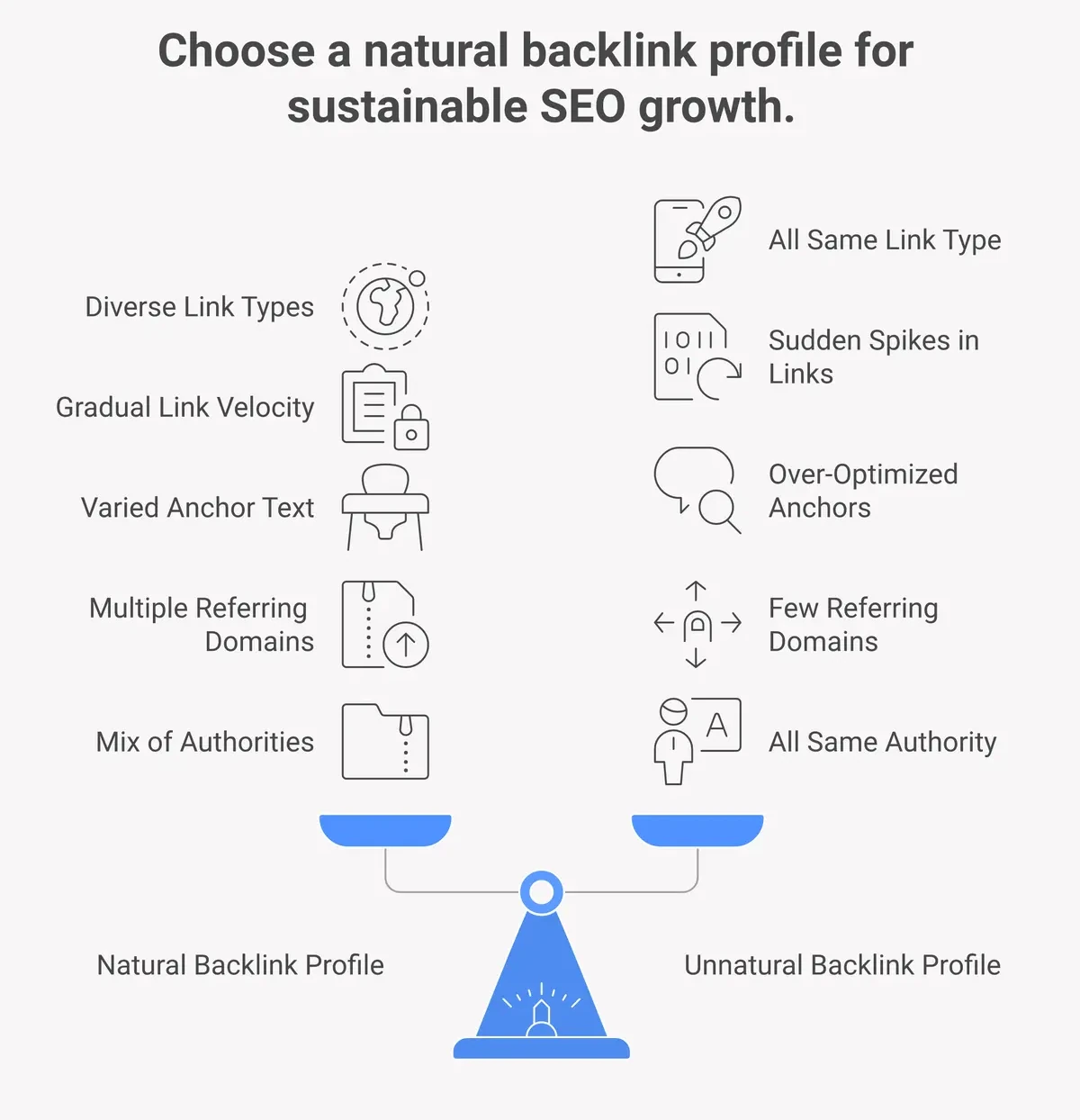
A site that earns links from only one type of source looks unnatural to Google. A healthy backlink profile includes a variety of link types, anchor texts, and referring domains. If all your links look the same, it raises red flags that you tried to manipulate rankings artificially.
The 7 Main Types of Backlinks Explained
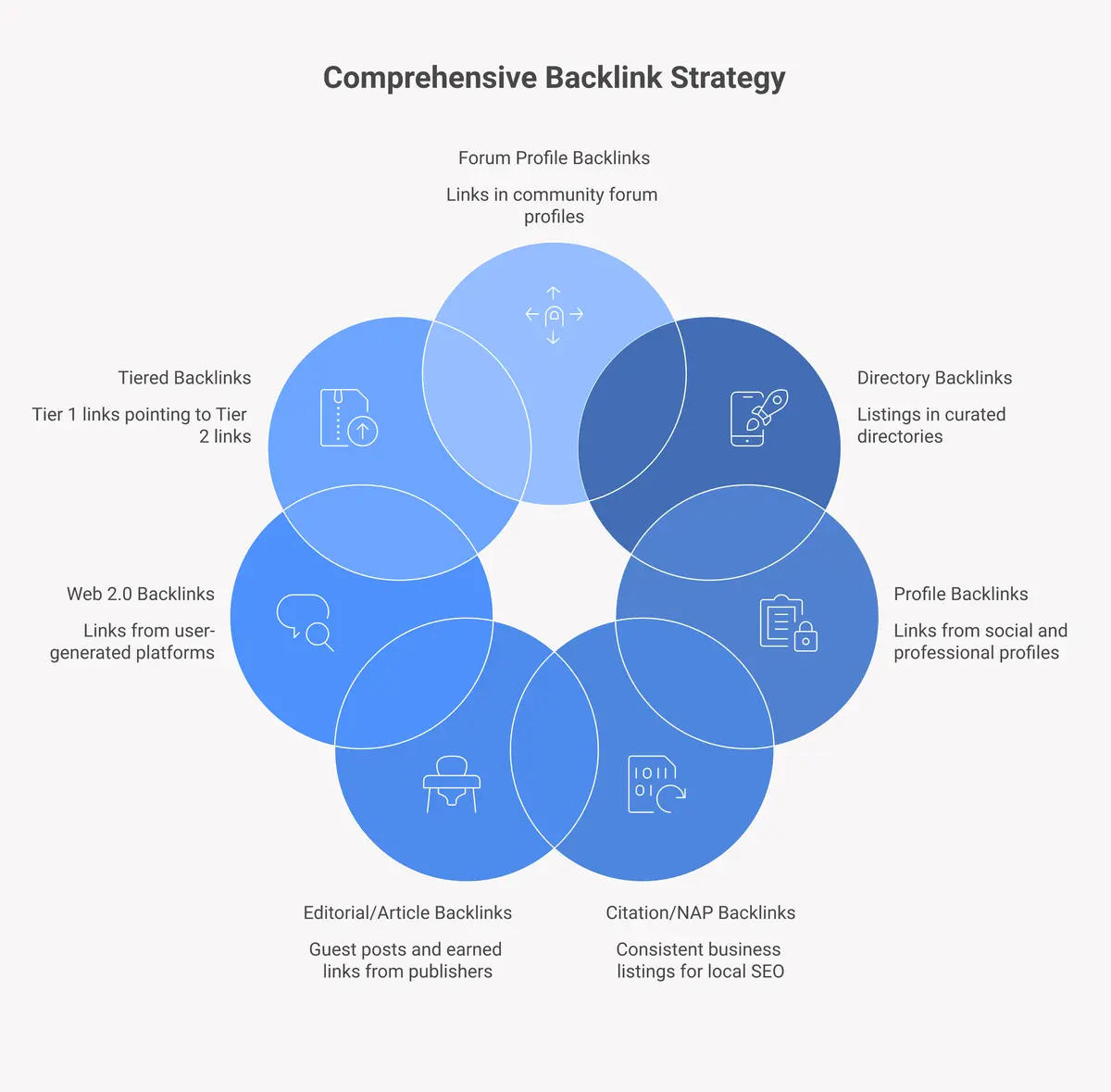
Here are the seven main backlink types you'll encounter, how they work, and what each one brings to your SEO strategy.
1. Directory Backlinks
Directory backlinks come from business listing sites and curated online directories such as Yelp, Clutch, or niche industry databases. These links carry real trust signals, especially when the directory vets its listings manually. The SEO value depends heavily on the directory's quality: a selective, niche-specific directory is worth far more than a generic, pay-to-list site that accepts anyone.
Local businesses benefit most from citation directories, while SaaS companies gain from startup and AI tool directories. Want to get your site listed efficiently? Our directory submission service handles submissions to 50+ curated directories, saving you weeks of manual effort.
2. Profile Backlinks
Profile backlinks come from creating accounts on social networks, developer platforms, and professional communities. GitHub, LinkedIn, Crunchbase, AngelList, and ProductHunt all allow you to add a website URL to your profile. These are legitimate, fast-to-build links that add variety to your backlink profile.
They're often nofollow, but they still contribute to brand authority and appear on platforms Google crawls and trusts. They're a smart first step for new domains that need early link diversity.
3. Citation/NAP Backlinks
Citation backlinks include your business Name, Address, and Phone number (NAP). They're critical for local SEO. When your NAP data is consistent across directories like Yellow Pages, Foursquare, and Bing Places, Google gains confidence that your business is legitimate and trustworthy.
Even a few inconsistencies in your NAP data can dilute the trust signal. Our citation building service ensures consistent listings across the most important platforms.
4. Editorial and Article Backlinks
Editorial backlinks are links you earn within published content, usually through guest posting, PR outreach, or because another site found your content worth citing. These are the most valuable types of backlinks in SEO because they combine domain authority with topical relevance and editorial trust.
A link from a well-respected industry blog, embedded naturally within an article, carries significantly more weight than a profile or directory link. Learn how to earn them in our guide to proven backlink building methods.
5. Web 2.0 Backlinks
Web 2.0 backlinks come from user-generated content platforms: Medium, Tumblr, Blogger, and WordPress.com. You create content on these platforms and include links back to your site. They're easy to build and serve well as tier 2 links, meaning they point to your tier 1 links to amplify them rather than pointing directly to your money pages.
On their own, web 2.0 links carry modest direct value. But used strategically as part of a tiered approach, they help boost the authority of more powerful links. Check out our list of free Web 2.0 backlink sites for a ready-to-use resource.
6. Tiered Backlinks
Tiered link building involves building links to your links. Tier 1 links point directly to your site. Tier 2 links point to those tier 1 pages, boosting their authority and passing more power to your domain. This structure is useful for amplifying directory or editorial links that might otherwise be slow to gain traction.
Done correctly, tiered backlinks are a legitimate and effective strategy. Done incorrectly, with spammy tier 2 sources, they can backfire if Google traces the pattern back to your site.
7. Forum Profile Backlinks
Forum profile backlinks are links placed in community forum profiles or within discussion threads. Platforms like Reddit, Quora, Stack Exchange, and niche industry forums allow you to add links in your profile or within answers. These are generally nofollow, but they drive real referral traffic and expose your brand to active, engaged communities.
When added within a genuine, helpful answer, forum profile backlinks add to your diversity without looking manipulative.
Which Backlink Types Carry the Most SEO Value?
Editorial backlinks from high-authority, topically relevant sites carry the most SEO value. These are followed by directory backlinks from curated platforms, citation links for local businesses, and profile links from trusted professional networks. Web 2.0, tiered, and forum profile links offer supporting value rather than primary ranking power.
Tier 1: Highest Link Equity
Editorial and article backlinks rank highest because they combine domain authority, topical relevance, and editorial trust. A link from a recognized industry publication is one of the most powerful signals you can earn. Guest posting is the most accessible path to these links. Use a tool like Boostramp to research potential link targets and assess their authority before you invest time in outreach.
Tier 2: Solid Supporting Links
Directory backlinks, citation links, and profile backlinks fall here. They don't carry the raw authority of editorial links, but they're reliable, consistent, and easy to build at scale. They form the backbone of any healthy backlink profile and add the diversity Google expects from an organically grown site.
Tier 3: Foundational and Supplementary
Web 2.0 links, forum backlinks, and social profiles round out the mix. On their own, these links move the needle less. But they signal a natural link acquisition pattern and help increase the flow of authority to higher-value links through tiered structures.
Which Backlink Types Carry the Most Risk?
Tiered backlinks built with low-quality sources, paid link networks, and bulk forum comment spam carry the highest risk. The risk comes not from the type itself, but from how it's built and the quality of the sources used.
What Makes a Backlink Risky?
Google's spam policies explicitly flag link schemes that attempt to manipulate PageRank. Any link that is bought, artificially created at mass scale, or placed in irrelevant contexts can trigger a manual penalty or algorithmic demotion.
Forum profile backlinks become risky when built at scale using automated tools across unrelated forums. Web 2.0 links become risky when filled with thin, keyword-stuffed content written only to host a link. Tiered links become risky when the tier 2 layer consists entirely of spam sites.
How to Minimize Risk Across All Backlink Types
The simplest rule: build links the way a real business earns them. Focus on quality over quantity. Use manual link building techniques when doing outreach yourself, and choose services that use transparent, white hat methods. Our white hat link building service only builds through methods that fully comply with Google's guidelines.
How to Build a Natural Mix of Backlink Types
The goal isn't to maximize any single type of backlink. It's to build a profile that looks like a real site earning links naturally over time. Start with foundational links, then layer in higher-value types as your domain grows.
Step 1: Foundational Links First
Begin with directory submissions, citation listings, and profile backlinks. These are quick to build, safe to acquire at scale, and establish your site's presence across the web. Aim for 20 to 50 quality directory links in your first few months. Our link building service on autopilot handles this foundational phase for you.
Step 2: Layer in Editorial Links Over Time
Once your domain has some foundational authority, start pursuing guest posts and editorial placements. Even 2 to 3 editorial links per month from relevant sites will compound into strong ranking power over time. Focus on topical relevance over pure domain authority metrics.
Step 3: Track Which Links Drive Real Results
Not all backlinks drive the same traffic. Use a tool like MyLinksFlow to see which specific links send real visitors and convert. This lets you double down on the link types and sources that actually move the needle for your site. Our backlink types reference page gives you a one-page breakdown of every type and when to use each one.
Frequently Asked Questions
What is the most valuable type of backlink for SEO?
Editorial backlinks from high-authority, topically relevant websites carry the most SEO value. These are links you earn through guest posts, PR outreach, or because another site found your content worth citing. They combine domain authority with contextual relevance, which is the strongest signal combination for Google rankings.
Are nofollow backlinks worth building?
Yes. While nofollow links don't pass the same direct ranking power as dofollow links, Google now treats nofollow as a hint rather than a strict rule. Nofollow links from trusted platforms like Reddit, Wikipedia, or major news sites still contribute to brand authority and referral traffic, and they add natural diversity to your backlink profile.
How many different types of backlinks should I have?
There's no fixed number, but a healthy profile includes at least 4 to 5 different backlink types. Most naturally grown sites have directory listings, profile links, a few editorial links, and some citation or forum mentions. The more diverse your sources, the more your link profile resembles genuine organic growth.
Can having too many of one backlink type hurt my SEO?
It can, especially if Google's algorithms detect a pattern that looks manipulated. A sudden spike in one type of link, particularly low-quality forum or Web 2.0 links, can trigger algorithmic scrutiny. The solution is consistent, gradual link acquisition spread across multiple types and sources over time.
What types of backlinks should I avoid completely?
Avoid links from link farms, paid link networks, irrelevant low-quality directories, and bulk automated submissions. These violate Google's spam policies and can result in manual penalties. Focus on quality, relevance, and diversity instead of chasing raw link volume from low-trust sources.