Profile Backlinks: What They Are and How to Use Them for SEO
Profile backlinks are among the most overlooked and most misunderstood links in SEO. Some dismiss them as worthless because many are nofollow. Others build hundreds of spammy forum profiles and then wonder why nothing improves.
The truth sits in the middle. Profile backlinks from the right platforms, built the right way, contribute real SEO value and are one of the fastest ways to add legitimate link diversity to a new or growing website. This guide explains exactly what profile backlinks are, which platforms are worth your time, and how to use them strategically without overdoing it.

What Are Profile Backlinks?
Profile backlinks are links to your website that appear on the public profile page of a social network, professional community, developer platform, or business directory. When you create an account on GitHub, LinkedIn, Crunchbase, or a forum like Indie Hackers and add your website URL to your profile, that URL becomes a profile backlink.
These links differ from editorial or directory backlinks in one important way: they come from accounts you create yourself rather than from a third party linking to you. That's also why they're often treated as lower authority than earned links. But from high-DA platforms, they still carry meaningful weight.
The Three Types of Profile Backlinks
Social profile links come from networks like LinkedIn, Twitter/X, Facebook, and YouTube. Professional community links come from platforms where you contribute content or code, like GitHub, Stack Overflow, or Quora. Business profile links come from directories and listing sites where you create a company or product profile, like Crunchbase, AngelList, or ProductHunt.
Dofollow vs Nofollow Profile Links
Most social media profiles (Twitter, Instagram, Facebook) use nofollow attributes on outbound links. Professional platforms like GitHub, Crunchbase, and LinkedIn often use dofollow. Business listing platforms like Google Business Profile, Yelp, and Clutch are typically dofollow. Always check a specific platform's link attributes, but don't avoid nofollow sources entirely. Google's algorithm treats nofollow as a hint, not a hard block, and nofollow links from high-DA platforms like Reddit or Wikipedia still contribute to brand authority and crawl signals.
Do Profile Backlinks Pass SEO Value?
Yes, profile backlinks from reputable, high-DA platforms pass SEO value when they are dofollow, when Google's crawlers regularly visit those platforms, and when the platform has genuine user-generated content and editorial trust. A GitHub profile link, a Crunchbase listing, and an AngelList profile are among the first links Google indexes for any new startup, and they contribute real domain authority signals.
The SEO value of a profile backlink is determined primarily by the domain authority of the hosting platform and whether the link is dofollow. Moz's research on link quality consistently shows that domain authority of the source is the single strongest predictor of link value transfer.
When Profile Backlinks Don't Work
Profile links stop contributing value when they come from low-DA, low-traffic platforms with no editorial oversight, when they're built at scale using automated tools across hundreds of irrelevant forums, or when they make up the overwhelming majority of a site's backlink profile. Used this way, profile link building becomes the exact tactic that Google's spam policies are designed to detect and devalue.
Best Platforms for Quality Profile Backlinks
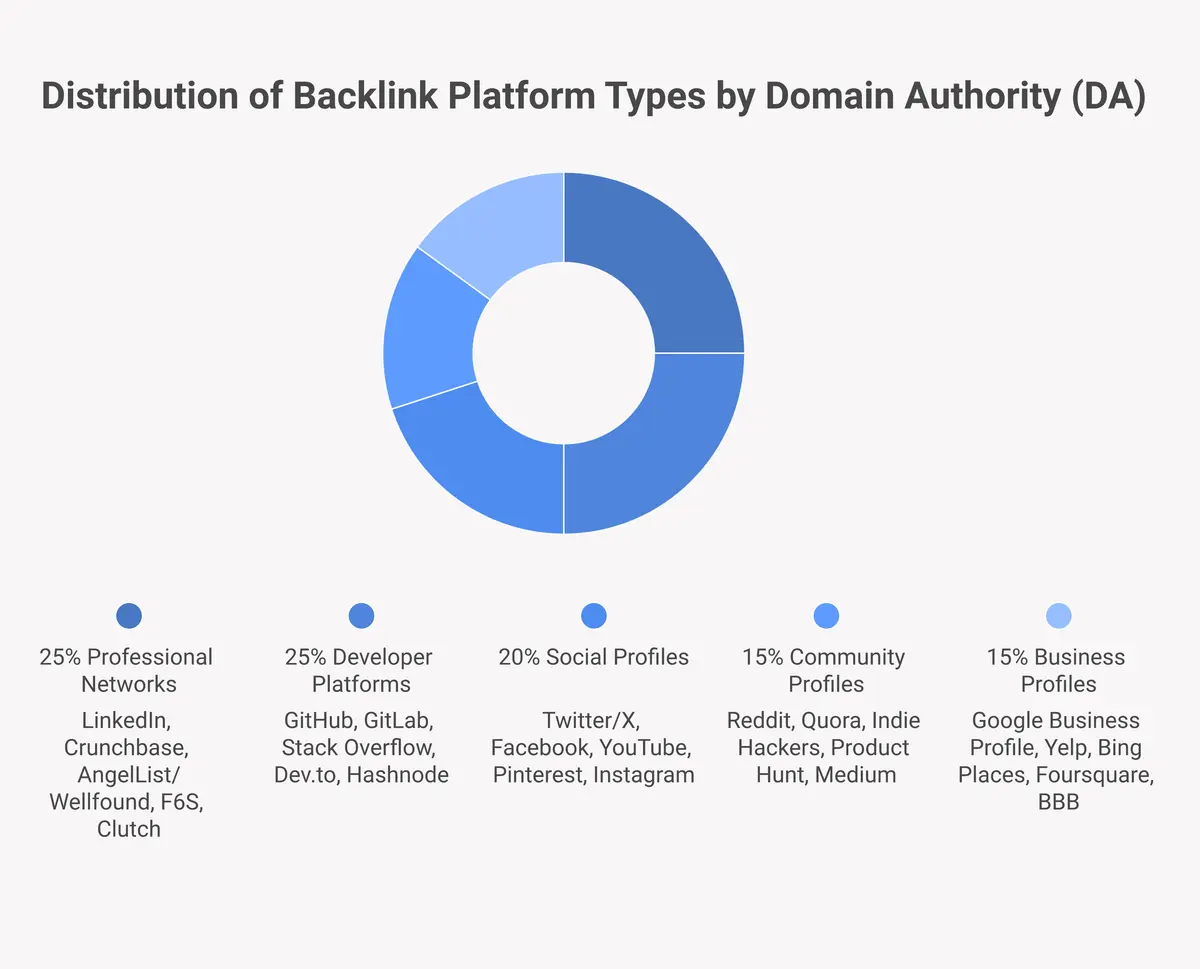
Not all profile platforms are worth your time. Focus on platforms that have high domain authority, genuine organic traffic, and where Google's crawlers are active. Here are the top categories and specific platforms worth building profiles on.
Professional Networks
LinkedIn, Crunchbase, AngelList/Wellfound, F6S, and Clutch are the highest-priority professional profile platforms. These are trusted by Google as entity reference points for businesses and individuals. A complete, well-optimized profile on LinkedIn and Crunchbase is often one of the first results Google shows for branded searches of your company name. These profiles serve double duty: backlink and brand reputation management.
Developer Platforms
GitHub, GitLab, Stack Overflow, Dev.to, and Hashnode are essential for tech startups and SaaS products. GitHub in particular has a domain authority near 95 and is crawled by Google constantly. A complete GitHub organization profile with a link to your website and a well-maintained repo earns one of the most trusted dofollow links available. Even if your product isn't open source, maintaining a public GitHub presence with documentation or sample code justifies the profile.
Startup and Product Communities
Product Hunt, BetaList, Indie Hackers, Peerlist, and Uneed are communities where your product profile includes a link back to your site. These are also launch platforms, so the profile link comes bundled with community exposure. The domain authority ranges from 40 to 90+ across these platforms, and all provide dofollow links. See our startup link building guide for how these fit into a complete early-stage strategy.
Business Listings and Review Sites
Google Business Profile, Yelp, Bing Places, Foursquare, and the Better Business Bureau provide citation-type profile links that are particularly important for local SEO. G2, Capterra, and Trustpilot provide profile links with the added benefit of review-driven organic traffic. These are detailed in our complete guide to types of backlinks.
How to Use Profile Backlinks as Part of a Diverse Strategy
Profile backlinks work best as the foundation layer of your link building strategy. They are fast to build, safe at reasonable scale, and provide the initial link diversity that enables higher-authority link types to have more impact. Think of them as establishing your site's presence across the web, not as the primary driver of ranking gains.
The Right Role for Profile Links
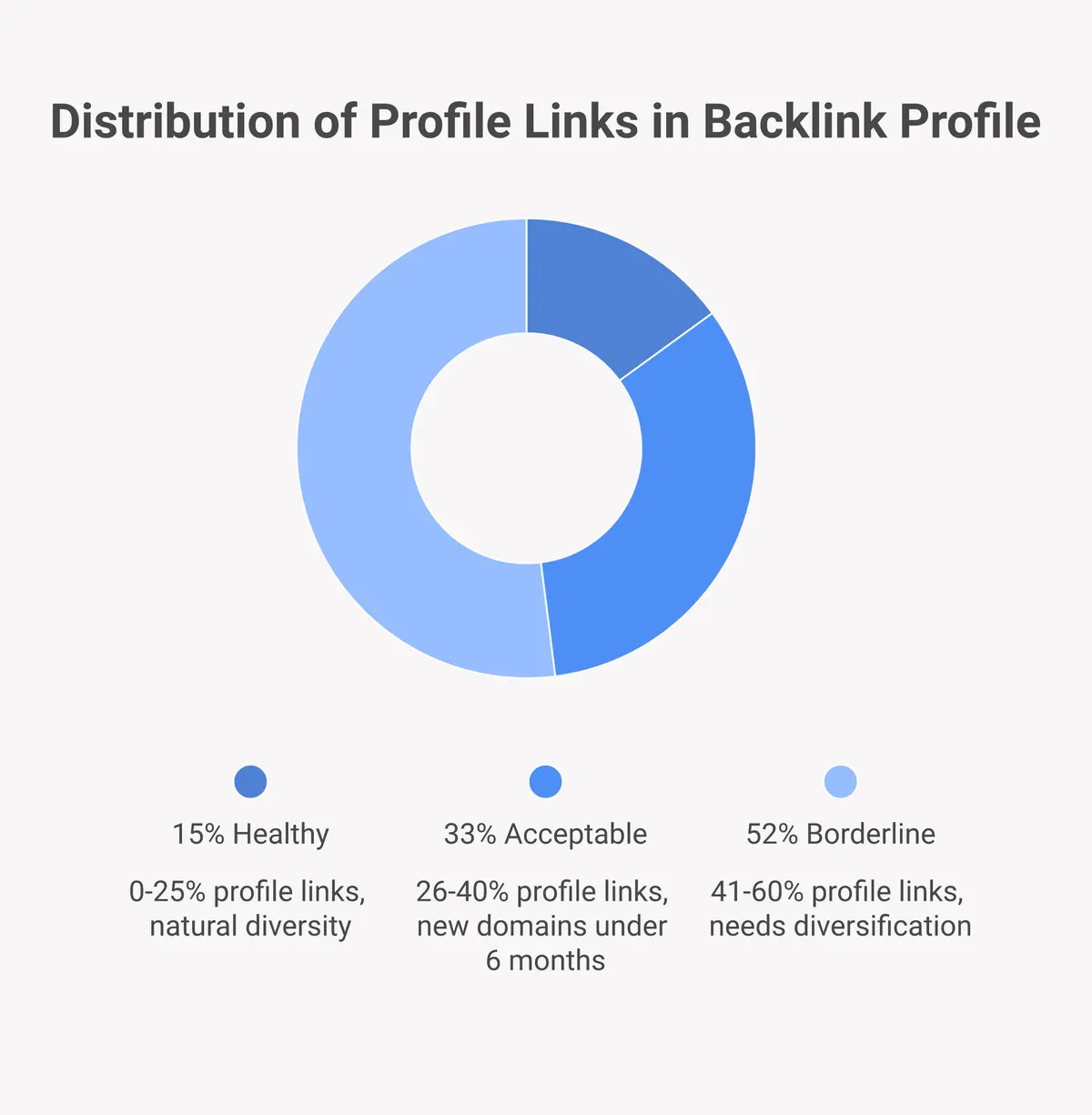
In a well-constructed backlink profile, profile links should make up 15 to 30% of your total link count. They contribute to anchor text diversity (since most profile links use your brand name or URL as anchor text), referring domain diversity, and topical trust signals from platforms in your niche. They are never a substitute for editorial links, but they make editorial links work better by establishing context.
Profile Links Strengthen Your Brand Entity
Google's knowledge graph uses profile links from authoritative platforms to build its understanding of your brand as an entity. Profiles on LinkedIn, Crunchbase, GitHub, and G2 collectively tell Google what your company does, who is behind it, and how established it is. This entity-building function of profile backlinks has significant impact on branded search visibility and AI-generated answer inclusion. Build consistent, detailed profiles on the most authoritative platforms in your space and keep them updated as your company evolves.
How Many Profile Backlinks Is Too Many?
Profile backlinks become a problem when they dominate your backlink profile to the exclusion of other link types. No precise number applies universally, but ratios matter. Keeping profile links below 30% of your total backlink profile after the first few months of building is a safe guideline.
Building Proportionally to Your Total Profile
For a new site with 0 to 50 total backlinks, profile links making up 40 to 60% of the profile is normal and expected. You're establishing your web presence from scratch. As you grow past 100 backlinks, the proportion should naturally shift. Directory links, editorial links, and guest post backlinks should progressively reduce the profile link percentage without you stopping your profile link building.
Monitor Your Profile With Dedicated Tools
Track your backlink type distribution using a dedicated backlink analysis tool. Use Boostramp to monitor your referring domains, link type breakdown, and anchor text distribution in real time. If you notice profile links creeping above 50% of your total profile as your site grows, it's a signal to accelerate your editorial and directory link building rather than to stop building profiles. Our link building service on autopilot handles this balance automatically, building the right mix of link types at a safe cadence.
Frequently Asked Questions
What are profile backlinks in SEO?
Profile backlinks are links to your website that appear on the public profile page of a platform, community, or directory where you've created an account. Common sources include professional networks like LinkedIn and Crunchbase, developer platforms like GitHub, startup communities like Product Hunt, and business listings like Google Business Profile. They provide link diversity and help establish your brand as a recognized entity.
Are profile backlinks good for SEO?
Yes. Profile backlinks SEO value is real when links come from high-DA, reputable platforms. Profile links from LinkedIn, GitHub, Crunchbase, G2, and similar trusted platforms pass real link equity and help establish your site's entity signals in Google's knowledge graph. The key is focusing on quality platforms with genuine traffic and editorial oversight, not building mass profiles on low-DA forums.
Are forum profile backlinks worth building?
Forum profile backlinks have limited value on their own, but they add to link diversity and can drive referral traffic when placed on relevant community platforms. High-DA forums like Stack Overflow, Hacker News, and niche industry communities are worth building profiles on. Low-quality, automated forum profile building across hundreds of irrelevant platforms is a spam signal and provides no SEO value.
How do I build profile backlinks safely?
Build profiles manually on a curated list of high-DA, relevant platforms. Focus on completing every profile fully: accurate business description, logo, website URL, and social links. Build gradually, adding 5 to 15 new profiles per month rather than hundreds at once. Choose platforms where your target audience and customers are actually active. Avoid automated profile creation tools that spray links across low-quality forums.
Do nofollow profile backlinks help SEO?
Yes, to a degree. Google treats the nofollow attribute as a hint rather than a hard rule since 2019, meaning high-DA nofollow links from platforms like Reddit, Wikipedia, or LinkedIn may still pass some authority signal. More importantly, nofollow links from major platforms add to your link diversity, help establish brand entity signals, and often drive real referral traffic regardless of their follow status.