Manual Link Building: How Solo Builders Get Backlinks Without Paying Anyone
You don't have a PR agency on speed dial. You don't have a link-building budget. You're probably wearing twelve hats at once, and "build backlinks" is buried somewhere at the bottom of your to-do list between "fix that CSS bug" and "reply to three-week-old emails." Sound familiar? Manual link building isn't a second-rate strategy for people who can't afford the real thing. It's a legitimate, sustainable approach that lets you build backlinks for free and grow real authority without paying anyone a cent. This guide gives you the exact tactics, tools, and outreach framework to make it work.
What Is Manual Link Building and Why Should Solo Builders Care?
Manual link building is the practice of earning backlinks through direct, person-to-person effort, rather than paid placements, link networks, or automated tools. You identify relevant sites, reach out to real people, and earn a link based on the value you offer. Solo builders care because it's the one link-building method that rewards hustle over budget.
Paid links and link farms exist, but they carry serious risk. Google's spam policies explicitly prohibit buying or selling links that pass PageRank, and penalties can wipe out months of ranking progress overnight. Manual link building sidesteps all of that. Every link you earn is legitimate, and it compounds over time.
There's another reason solo builders are actually well-positioned for this. Backlink outreach is personal. You're not a faceless agency sending templated pitches. You're a real person with a real product, and that authenticity opens doors that corporate link-building campaigns can't.
How manual link building fits into organic link building
Organic link building happens when people link to you without being asked, because your content is that useful. Manual link building is what gets you there. You earn the first wave of links through outreach, those links boost your authority, and eventually the organic links start coming on their own. Think of manual outreach as priming the pump.
What makes a backlink worth going after
Not all links are equal. Focus on links from sites that are topically relevant to your niche, have genuine traffic, and have a Domain Rating (DR) or Domain Authority (DA) above 30. A single link from a respected industry blog beats ten links from unrelated directories. Quality always wins.
Which Manual Link Building Tactics Actually Work Without a Budget?
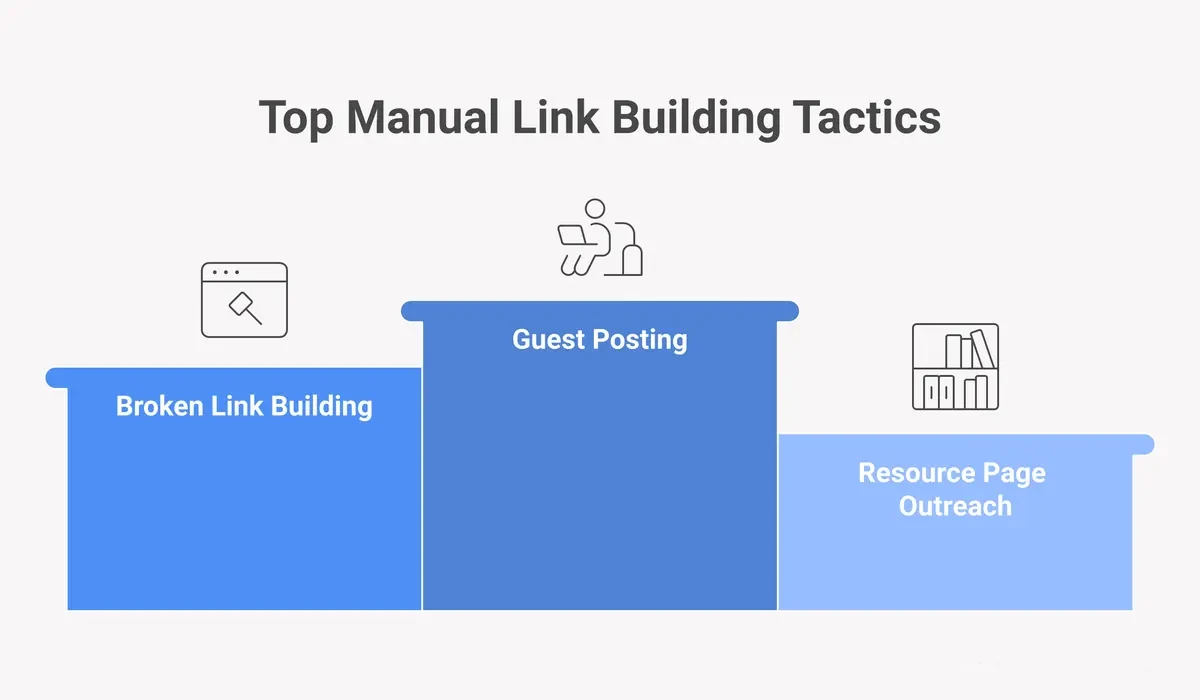
There are dozens of link-building tactics out there. Most require either money, a big team, or years of existing authority. These four are the ones that consistently deliver for solo builders starting from scratch.
Guest Posting for Backlinks
Guest posting means writing an article for someone else's blog in exchange for a byline link back to your site. It's one of the highest-leverage manual tactics because you get the link AND exposure to an established audience. Start small: target blogs in your niche with DR 20-50 and a real readership. Pitch a specific article idea that fills a gap in their content, not a generic "I'd love to contribute" email.
The key to landing guest posts without credentials is the pitch itself. Lead with the value for their readers. Show that you've actually read their blog by referencing a specific post. Offer a title and a one-paragraph outline. That's it. Keep it short and make it easy to say yes.
Broken link building
Broken link building is a classic for good reason. You find a page on a target site that links to a dead URL (404 error), then reach out to tell the site owner and suggest your content as a replacement. It's a genuine favour wrapped in a link request. Ahrefs found that broken link building has one of the highest response rates of any outreach method because you're leading with helpfulness, not a cold ask.
Use a free tool like the Check My Links Chrome extension to find broken links as you browse. Or use Ahrefs' free backlink checker to look at a competitor's broken inbound links and reach out to those sites with your alternative content.
Resource page link building
Many websites maintain curated "resources" or "tools" pages that link out to useful content in their niche. If you've built something genuinely helpful, getting listed here is one of the cleanest link wins available. Search Google for terms like + "useful resources" or + "recommended tools" to find them. Reach out with a short, direct pitch about why your resource fits their list.
HARO and media mention outreach
Help a Reporter Out (now rebranded as Connectively) connects journalists with expert sources. Sign up as a source, respond to relevant queries with concise expert quotes, and earn links from news sites and high-authority publications. It's free, and the links you can earn are often from sites with DR 70+. The catch is that you need to respond fast, within a few hours of the query going out, and your answer needs to be genuinely quotable.
How to Find Link Prospects Without Paid Tools
You don't need an expensive SEO suite to build a solid link prospect list. Google and a few free tools give you everything you need to get started.
Google search operators for prospect discovery
Search operators are shortcuts that let you run targeted searches that most people never use. Here are the most useful for link prospecting:
- intitle:"write for us" - finds blogs actively accepting guest posts
- inurl:resources - finds resource pages in your niche
- site:*.com - finds sites linking to your competitors
- "" + "recommended reading" - finds curated lists that might include your content
Run five or six of these searches and you'll have a prospect list in under an hour. Save them in a simple spreadsheet: site name, URL, contact email, and a note on why it's relevant.
Free tools for link research
Ahrefs offers a free backlink checker that shows the top 100 backlinks for any URL. Enter a competitor's homepage and you instantly see who's linking to them. Moz offers a similar free Domain Analysis tool. For finding contact emails, Hunter.io gives you 25 free lookups per month, which is plenty when you're starting out. Combine these with Google and you have a complete prospecting toolkit at zero cost.
You might also want to track your existing backlinks as you build, so you know which of your efforts are landing. Even Google Search Console shows you your top linking domains for free under the "Links" report.
How Do You Write a Cold Outreach Email That Gets Replies?
A cold outreach email that gets replies has one thing in common with good copywriting: it's entirely about the reader, not the sender. Lead with what's in it for them, make it short, and make the ask obvious. Most outreach fails because it's a wall of text about how great the sender is. Don't be that email.
The anatomy of an outreach email that works
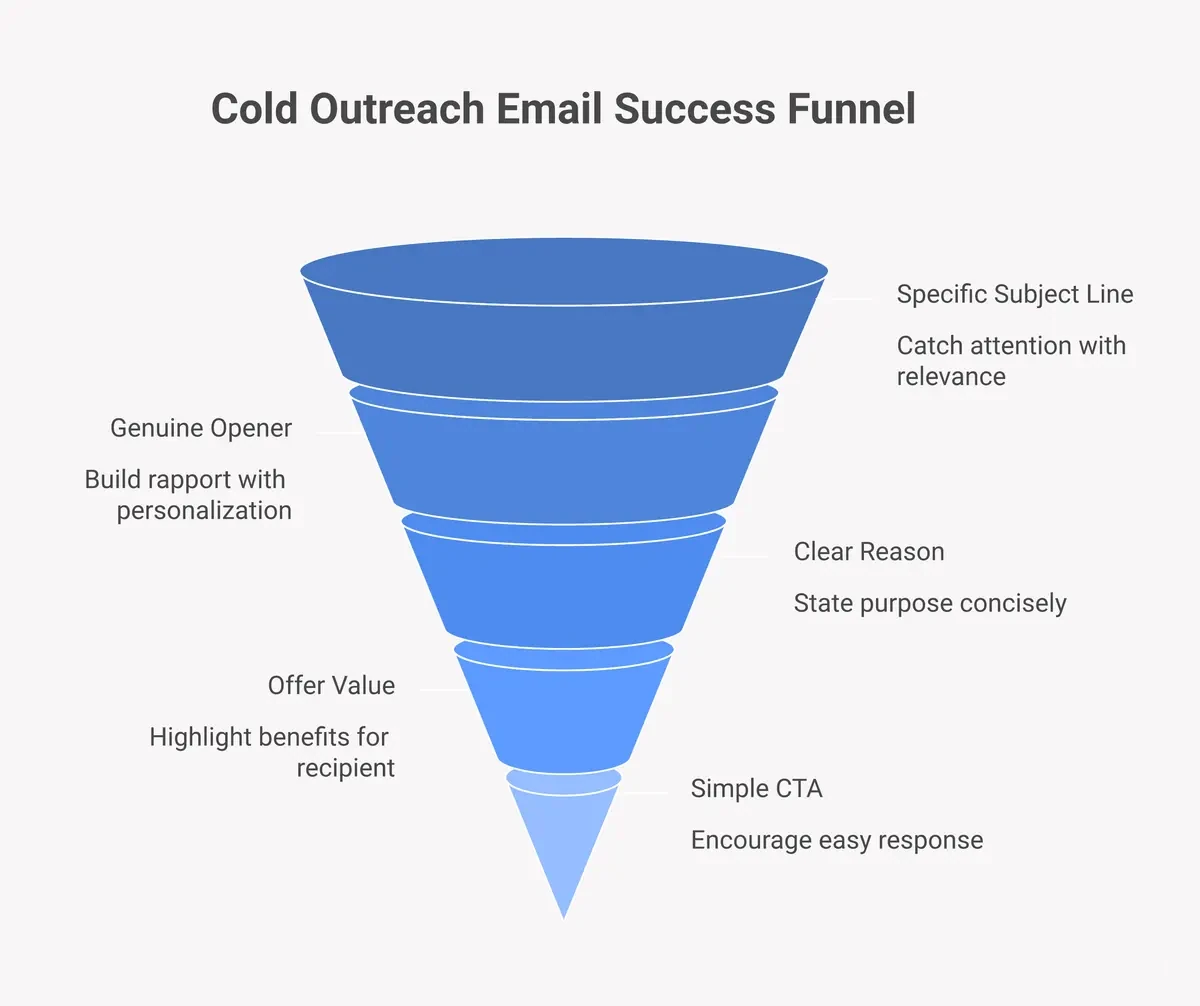
Your email needs five elements, in this order:
- A specific subject line - reference their site or a specific post they wrote, not a generic "collaboration opportunity"
- A genuine opener - one sentence showing you've actually engaged with their content
- The reason you're writing - clear, direct, one sentence
- The value you're offering - what's in it for them (a fix, a resource, an article idea)
- One clear CTA - a simple yes/no question, not a multi-step request
Total length: 5-7 sentences. That's it. Backlinko's research on outreach emails shows that shorter, personalised messages consistently outperform long templated pitches in both open rate and reply rate. When you're building backlinks for a new site, personalisation is your main competitive advantage over bigger brands with bigger outreach lists.
Follow-up strategy that doesn't feel pushy
Most replies come from follow-ups, not first emails. Send one follow-up 5-7 days after your initial email. Keep it to two lines: a gentle reminder and the original ask restated. Don't apologise for following up. If you get no reply to the follow-up, move on. The ratio that works for most solo builders is one follow-up per prospect, sent once, and then they're done.
Tracking your outreach
Use a Google Sheet with columns for: prospect site, contact name, email, date sent, date followed up, and status (replied, no reply, link earned, declined). This takes ten minutes to set up and saves you from embarrassing double-outreach or missed follow-ups. Keep it simple and you'll actually use it.
Building Links Through Content That Earns Them Naturally
The best link building strategy is creating content so useful that people link to it without being asked. This is called organic link building, and while it takes time to kick in, it reduces your ongoing outreach burden significantly. Solo builders can punch above their weight here because it doesn't require a team.
Original data and research
Original research earns links passively for years. You don't need a massive survey. Run a poll in a relevant community, compile publicly available data into a useful format, or document your own experiments with real results. When journalists, bloggers, and other content creators need a statistic to cite, they link to the source. Be that source. Even a small dataset on a niche topic can earn dozens of links over time.
Free tools and calculators
If you build something genuinely useful, whether it's a calculator, a template, a checklist, or a small free tool, people link to it naturally. Free tools are among the most linked-to content types on the web because they solve a real problem on demand. You can also consider joining a backlink exchange platform to supplement your content-driven strategy with structured link partnerships. Just make sure any exchanges are contextual and relevant to your niche.
Comprehensive guides that fill a gap
Find a topic in your niche where the existing content is thin, outdated, or just bad. Write the definitive guide. Cover every angle. Add examples. Use real data. A genuinely comprehensive guide naturally earns links because other writers cite it when they need to reference that topic. This is the long game, but it's the highest-ROI content investment a solo builder can make.
How Do You Track Your Backlinks for Free?
Manual link building without tracking is just guessing. You need to know which outreach campaigns are working, which links have gone live, and whether any of your existing links have been removed. All of this is possible with free tools if you know where to look.
Free tools for backlink monitoring
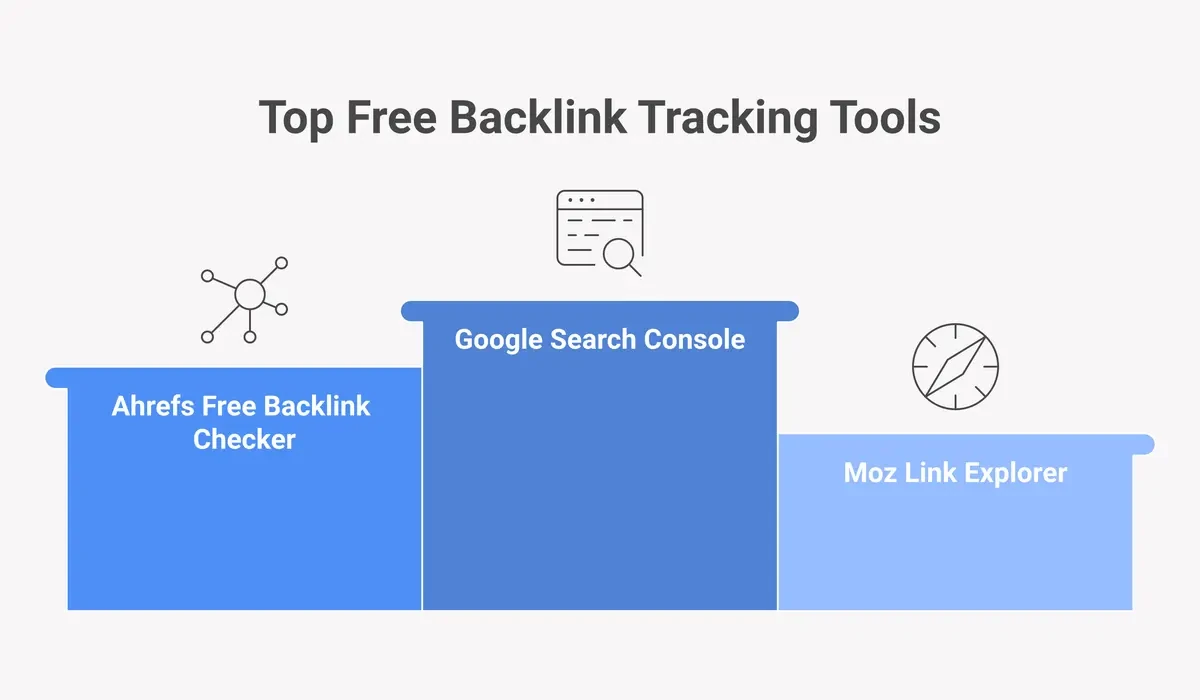
Google Search Console is the best free backlink tracker available. Under the "Links" section, you'll see your top linking domains, top linked pages, and anchor text distribution. It updates weekly, it's directly from Google, and it costs nothing. For a more detailed view, Ahrefs' free Backlink Checker lets you see the top 100 links for any URL, and Moz's Link Explorer gives you up to 10 free queries per month. Together, these three cover everything a solo builder needs.
If you want to take backlink monitoring further, check out a dedicated backlink monitoring tool that alerts you when new links appear or existing ones drop. This saves you from manually checking every week and lets you respond faster when something changes. You should also look at ways to speed up backlink indexation so newly earned links start contributing to your rankings sooner.
What to do with your backlink data
Review your backlink profile every two to four weeks. Look for three things: new links (celebrate them, note what earned them), lost links (reach out if a valuable one disappears), and low-quality links (disavow using Google's Disavow Tool if they look spammy). You can also check which of your pages earn the most links. Those pages are your strongest assets. Write more content like them, build internal links from them to other pages, and use them as leverage when pitching guest posts.
Tracking turns manual link building from a blind activity into a feedback loop. You learn what works, double down on it, and stop wasting time on tactics that don't move the needle.
Manual link building is not a quick fix. But it's one of the few growth strategies where a solo builder with limited resources can genuinely compete with bigger players. The tactics are straightforward. Free link building tools are available from day one, and this approach costs nothing but your time. What separates people who build real authority from those who don't is simply the consistency of showing up and doing the outreach. Start with one tactic this week, whether that's finding three broken link opportunities or drafting your first guest post pitch. One link earned beats a dozen tactics half-started. You've got this.
Frequently Asked Questions
How long does manual link building take to show results?
Most solo builders start seeing ranking improvements within three to six months of consistent manual outreach. Links need to be discovered and indexed by Google first, which can take a few weeks. After that, authority builds gradually. Consistency matters more than speed: ten outreach emails a week, every week, outperforms a burst of 100 emails followed by nothing.
How many backlinks do I need to rank for competitive keywords?
There's no fixed number because it depends entirely on your competitors. Use Ahrefs' free Keyword Difficulty score or Moz's DA comparison to benchmark how many referring domains the top-ranking pages have. For low-competition keywords, 10-30 quality links can be enough to rank. For competitive terms, you may need hundreds. Start with low-competition keywords and build up from there.
Is link exchange safe for manual link building?
Link exchanges can be safe when done in moderation and kept contextually relevant. A reciprocal link between two genuinely related sites that serves the reader is unlikely to cause issues. What Google penalises is large-scale, artificial link exchange schemes with no editorial relevance. If you're unsure, read more about how link exchange SEO works in 2026 before committing to any arrangement.
Can I build backlinks without creating new content?
Yes. Broken link building, HARO responses, and resource page inclusion don't require you to create new content. You can also earn links to existing pages on your site by finding sites that mention your brand or product without linking, then reaching out to ask for the link. This is called unlinked mention reclamation, and it often has the highest conversion rate of any outreach tactic.
What's the biggest mistake solo builders make with link building?
Spreading effort too thin across too many tactics at once. Solo builders have limited time. The mistake is dabbling in guest posts, broken links, HARO, resource pages, and social media all at the same time and doing none of them consistently. Pick one tactic, execute it well for 60 days, measure the results, and then add a second. Focus beats variety every time when you're working alone.