How to Get Backlinks: 12 Proven Methods That Actually Work
Getting backlinks is the part of SEO that separates sites that rank from sites that don't. Content alone won't do it for competitive keywords. You need other websites pointing at yours as a signal of authority and trust.
This guide covers 12 proven methods for getting backlinks in 2026, from completely free to paid, from easiest to most time-intensive. You don't need to do all of them. You need to do the right ones for your situation.

Why Backlinks Still Drive Rankings in 2026
Google has confirmed that links are one of the top three ranking factors. Every major SEO correlation study shows that pages with more high-quality backlinks rank higher than pages with fewer, regardless of content quality differences. That hasn't changed.
What has changed is how Google evaluates link quality. Links from relevant, authoritative sites count more. Links from link farms count less, or actively hurt. Getting links for SEO in 2026 means building quality, not volume.
12 Proven Methods for Getting Backlinks
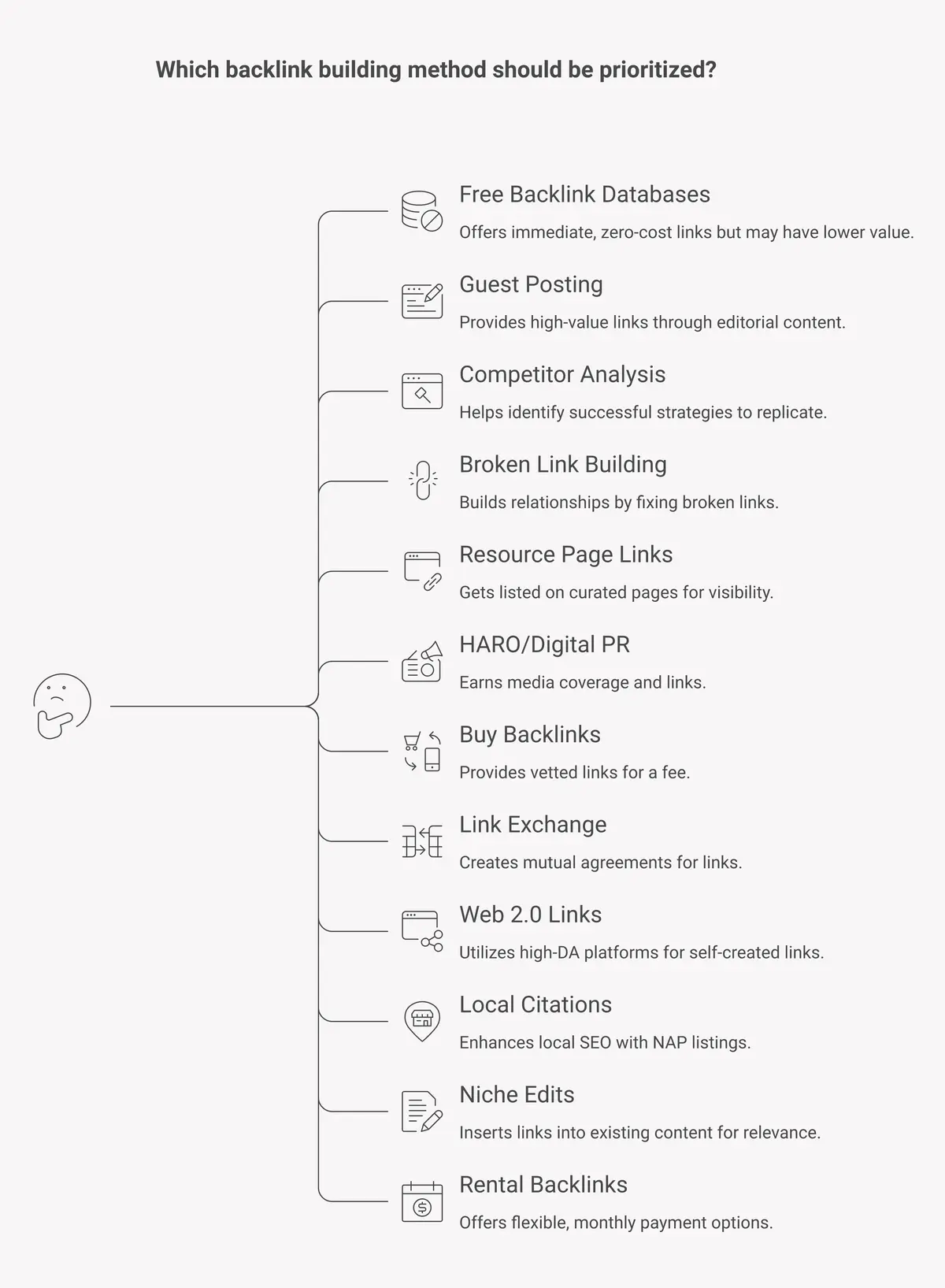
Method 1: Free Backlink Databases
The fastest way to start getting links. Platforms like our free backlinks database give you access to hundreds of pre-vetted submission opportunities at no cost. Submit your site, get a dofollow or nofollow link from a legitimate platform. No outreach needed.
Method 2: Guest Posting
Write an article for another website in your niche and include a contextual link back to your site. Guest posts are editorial links, meaning a real editor approved the content. They carry strong authority. The challenge is finding sites that accept pitches and writing something good enough to get published.
Method 3: Competitor Backlink Analysis
Knowing how to find competitors backlinks gives you a ready-made list of proven link sources. Find out where your competitors get their links, then get listed on the same platforms. Use our backlink monitoring tool or any major SEO platform to pull your competitor's link profile. Focus on directories, resources pages, and niche blogs they're listed on. If they got a link there, you can too.
Method 4: Broken Link Building
Find broken links on websites in your niche, then reach out to the webmaster with a replacement: your content. Tools like Ahrefs or Screaming Frog can scan target sites for 404 errors. You offer them a fix for their broken page, and you get the link. Everyone wins.
Method 5: Resource Page Links
Many websites maintain "resources" or "useful links" pages that curate the best tools and guides in a niche. Find those pages with Google searches like + "useful resources" or + "recommended links". Pitch your content as something worth adding.
Method 6: HARO and Digital PR
Help a Reporter Out (HARO) and similar platforms send journalists daily queries looking for expert sources. Respond with a useful quote or data point and you earn editorial mentions and links from news sites. Requires consistency, but the links are some of the highest-authority you can get.
Method 7: Buy Backlinks via Marketplace
Buying links is against Google's guidelines when done through link schemes. But legitimate backlink marketplaces connect you with site owners selling editorial placements. Done carefully, this is a viable strategy. Focus on topical relevance, real traffic on the linking site, and natural anchor text.
Method 8: Link Exchange
Partnering with another site to swap links is one of the oldest link building strategies. Google discourages excessive reciprocal linking, but a reasonable exchange between genuinely related sites is still a legitimate signal. Our backlink exchange platform makes finding partners easier.
Method 9: Web 2.0 Links
Create content on high-authority user platforms like Blogger, Hashnode, or Substack and include links back to your site. These are self-created links but from legitimate, high-DA platforms. They work best when combined with other methods as part of a diverse profile. See our complete web 2.0 list for the best platforms to use.
Method 10: Local Citations
For local businesses, NAP citations (Name, Address, Phone) across directories like Google Business, Yelp, and industry-specific directories are both backlinks and local ranking signals. Even non-local sites benefit from being listed consistently across established business directories.
Method 11: Niche Edits
Niche edits (also called link insertions) involve adding your link into an existing piece of published content on another site. The page is already indexed, already has traffic, and your link goes into an article that's topically relevant. This is a faster path to getting link equity compared to waiting for a new guest post to be indexed.
Method 12: Rental Backlinks
Rent a link on an existing high-traffic page and pay a monthly fee to keep it live. If you stop paying, the link comes down. It's a flexible, lower-risk option for testing which link placements actually move your rankings. Our rental backlinks service handles this with daily pricing and no long-term contracts.
How to Track Your Backlinks
Building backlinks is half the work. Knowing which ones are live, indexed, and contributing to your rankings is the other half.
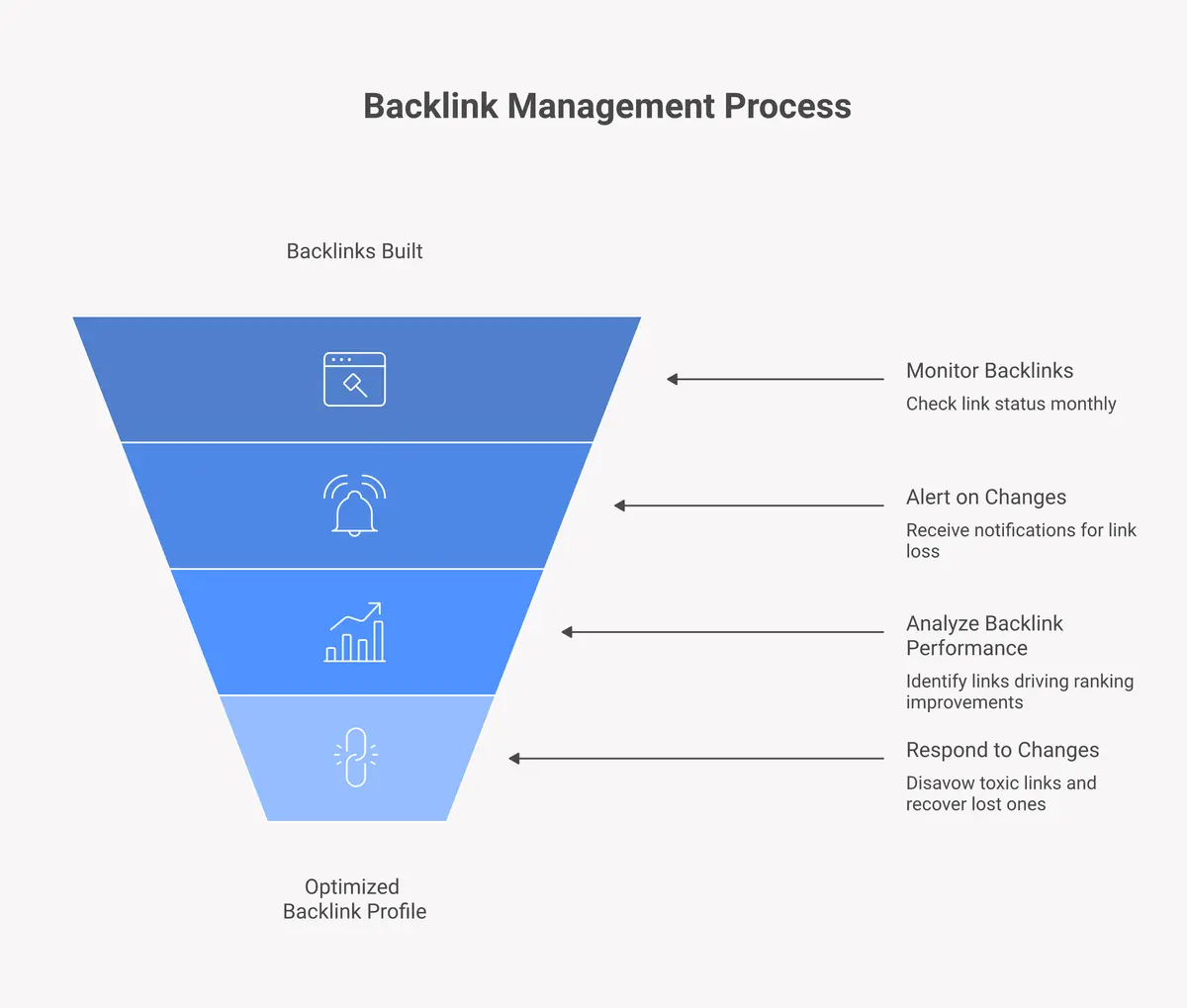
What good backlink tracking covers
- Monitor — Check which links are live and indexed each month
- Alert — Get notified immediately when you lose a backlink
- Analyze — See which links correlate with ranking improvements
- Respond — Disavow toxic links, recover lost ones, replicate what works
Our backlink monitoring tool handles all of this automatically. You get notifications for new and lost links without needing an enterprise SEO subscription.
How to check backlinks in Google Search
Google Search Console shows your site's backlinks under "Links" in the left sidebar. It's not comprehensive (Google doesn't show all links it knows about), but it's the most accurate data on links Google actually counts. Use it alongside a third-party monitoring tool for the full picture. See our guide on how to check backlinks in Google for step-by-step instructions.
How to find competitors' backlinks
Enter a competitor's domain into any backlink analysis tool to see where they get their links. Look for directories they're listed in, blogs that mention them, and resource pages that link to them. These are all opportunities you can replicate. Our guide on finding competitors' backlinks walks through this step by step.
100% free. No credit card required.
Frequently Asked Questions
What is the fastest way to get backlinks?
Free backlink databases and directory submissions are the fastest methods. You can get 10 to 20 links within days by submitting to established directories and Web 2.0 platforms. For faster results at scale, consider a marketplace where you can purchase vetted editorial placements directly.
How many backlinks do I need to rank?
It depends on your niche and target keyword competition. For low-KD keywords (under 20), 10 to 30 quality backlinks can be enough to rank on page one. For competitive terms (KD 50+), you may need hundreds. Study the link profiles of the pages currently ranking for your target keyword and use that as your benchmark.
Are free backlinks as good as paid ones?
Quality matters more than price. A free directory listing from a DA 60 site is more valuable than a paid link from a DA 10 blog. The best strategy combines free methods (databases, Web 2.0, profiles) with selective paid placements in high-authority, relevant publications.
How do I get links for SEO without outreach?
Submit to free backlink databases, create accounts on Web 2.0 platforms with contextual links, get listed on business directories, and use a backlink marketplace. All of these methods get you real links without cold email outreach. Outreach becomes necessary only when you want editorial links from major publications.
What is the difference between getting links and getting backlinks?
They mean the same thing in SEO context. A backlink is a link from another website pointing to yours. "Getting backlinks" and "getting links for SEO" both refer to the process of acquiring those inbound links to improve your site's authority and rankings.