Editorial Backlinks: What They Are and Why They are the Most Valuable Links
Not all backlinks are created equal. Some links you buy. Some you beg for. But editorial backlinks? Those are earned. They're the links that other websites give you because your content genuinely deserves it. No payment. No request. Just a vote of confidence from an editor or writer who found your work valuable enough to cite.
These are the links Google trusts most. They're the foundation of natural link building, and they're what separates websites that rank long-term from those that chase quick wins. If you want to understand why editorial backlinks are the gold standard in SEO, and how to actually earn them, this guide covers everything you need to know.

What Are Editorial Backlinks?
Editorial backlinks are organic backlinks placed by a writer or editor because they found your content genuinely useful. You didn't pay for them, ask for them through outreach, or swap them in a link exchange. They happen naturally when your content earns its place as a reference.
Think about it this way: when a journalist writes about SEO trends and links to your original research, that's an editorial backlink. When a blogger explains a concept and cites your in-depth guide, that's an earned backlink. The key is that the decision to link was entirely the editor's choice.
What Makes a Link "Editorial"?
The defining feature is editorial discretion. The person linking to you chose to do so without any incentive or arrangement. This is different from paid links, sponsored content, or reciprocal link exchanges where there's always a transaction behind the placement.
You can learn about the full spectrum of link types in our guide to types of backlinks, but editorial links sit at the top of the value hierarchy.
Examples of Editorial Backlinks
A news site citing your study on industry trends. A blogger linking to your free tool as a resource. A Wikipedia editor referencing your research page. A popular podcast using your article as a source in their show notes. These are all real-world examples of natural link building in action.
Why Editorial Links Are Best for SEO
Editorial backlinks are the most trusted signal Google uses to evaluate a page's authority. Because no money changed hands and no deal was made, they represent a genuine third-party endorsement. Google's algorithm is designed to detect and reward exactly this kind of link.
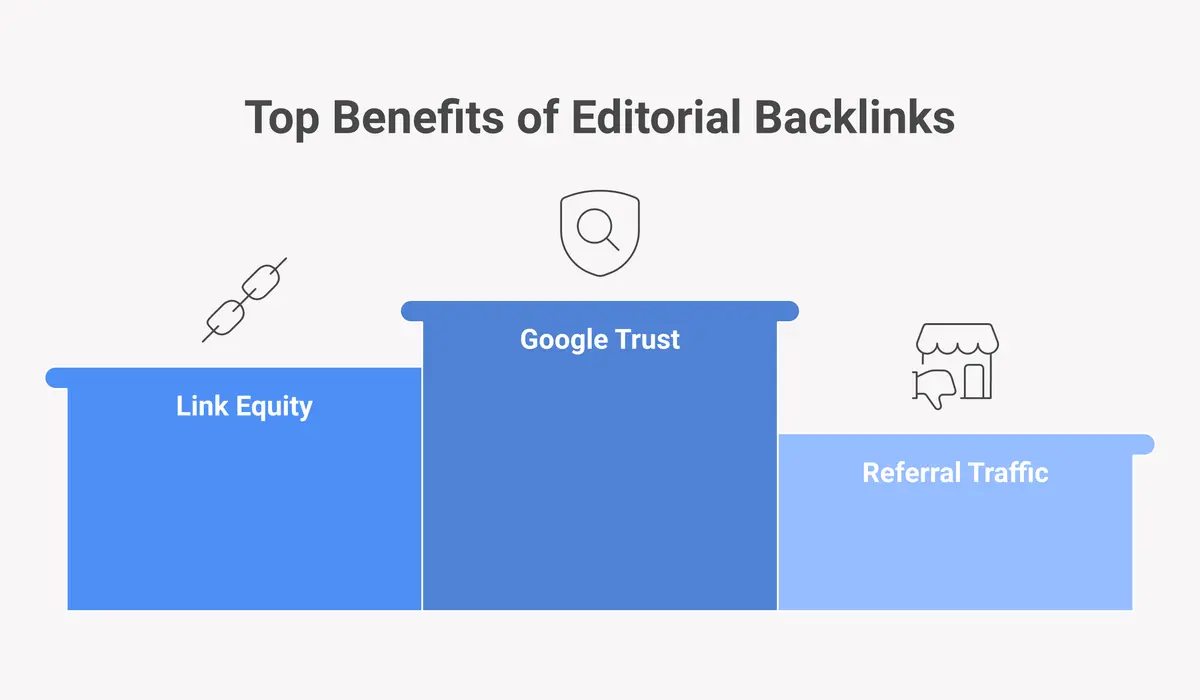
They Pass the Most Link Equity
Link equity, often called PageRank, flows most freely through contextual editorial links. When a high-authority site links to you naturally within their content, it passes genuine ranking power to your page. Paid links are often nofollowed or discounted. Editorial links almost never are.
They Use Natural Anchor Text
When someone links to you editorially, they write their own anchor text. This creates a diverse, natural anchor profile that looks healthy to search engines. Over-optimized anchor text from paid links can actually trigger penalties. Editorial links build your profile the right way.
They Drive Real Traffic
Because editorial backlinks appear in content that people actually read, they send real referral traffic your way. This traffic has high intent. The reader was already engaged with a topic related to yours, making them a warm prospect rather than a random visitor.
They Compound Over Time
A great piece of content earns editorial links for months or years. Every new link adds to your authority. Unlike paid links that stop working the moment you stop paying, earned backlinks keep delivering value long after you created the content.
How to Earn Editorial Backlinks (5 Methods)
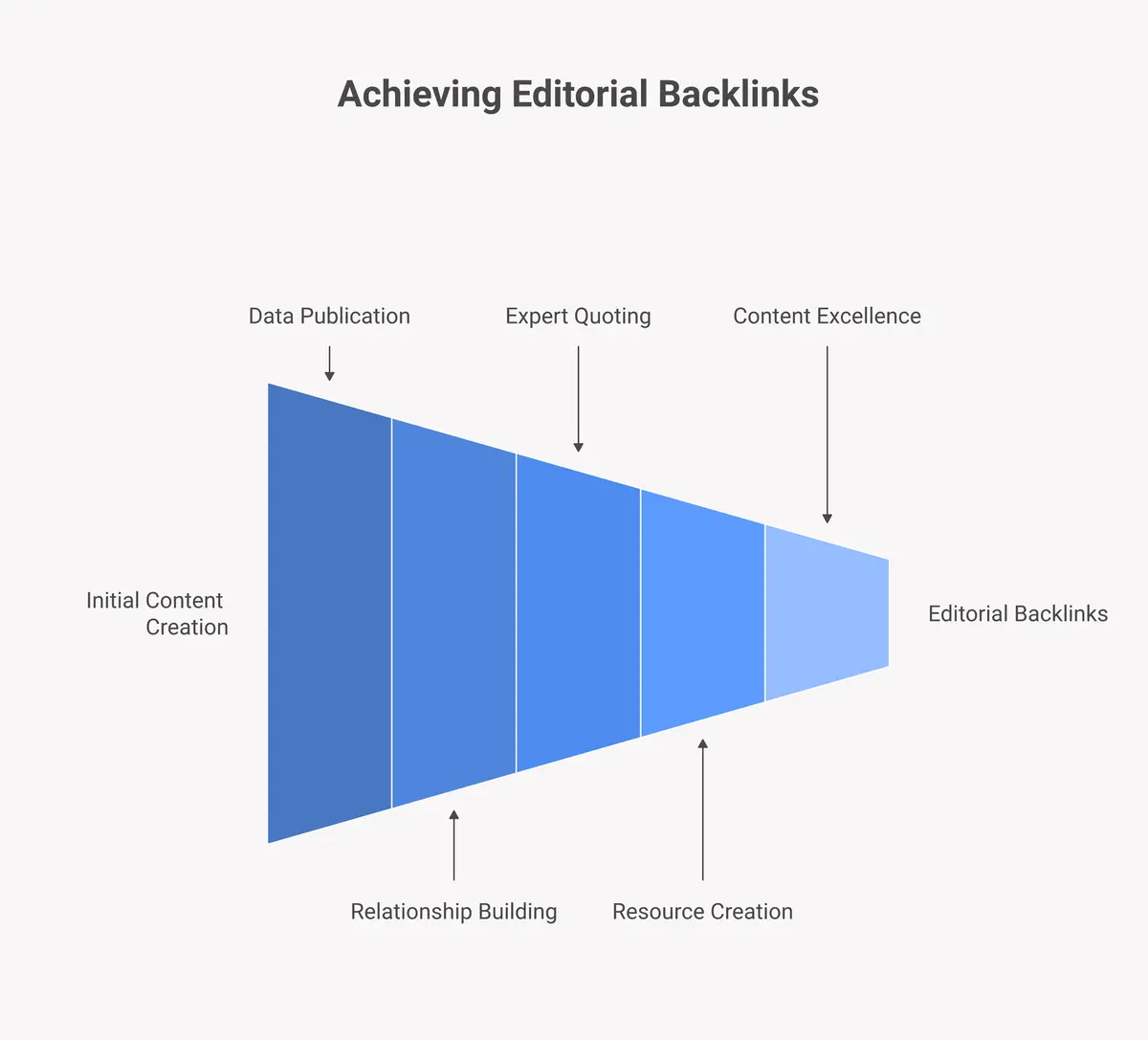
Earning editorial backlinks isn't magic, but it does require giving people a real reason to link to you. Here are five proven methods that work for organic backlinks at scale.
1. Publish Original Research and Data
Data-driven content earns more editorial links than almost anything else. Run a survey, analyze a dataset, or compile statistics that don't exist anywhere else online. Journalists and bloggers are always looking for credible numbers to cite, and they'll link back to the source. Even a simple industry survey can generate dozens of earned backlinks over time.
2. Create the Best Resource on a Topic
Write the most comprehensive, up-to-date guide on a subject your audience cares about. When someone wants to explain a concept and needs a reference, they'll link to the best available resource. If that's you, you earn the link. This is sometimes called the "skyscraper" approach to content.
3. Build Genuine Industry Relationships
People link to writers and brands they know and trust. Get active in your niche. Leave thoughtful comments. Engage on social media. Show up at virtual or in-person events. When editors and bloggers know your name, they think of you when they need a source.
4. Get Quoted as an Expert
Sign up for HARO (Help a Reporter Out) or similar platforms like Qwoted. Journalists post queries looking for expert sources, and when they use your quote, they link back to you. This is one of the fastest ways to earn editorial backlinks from high-authority news and media sites.
5. Build Free Tools and Templates
A free calculator, template, or checklist can earn links for years. When someone finds your tool useful, they share it. When bloggers write about related topics, they recommend it. Tools are inherently linkable assets because they provide ongoing utility rather than a one-time read.
Editorial vs Bought Links
Bought links and editorial backlinks might look the same on the surface, but Google is getting better at telling them apart. Here's why the distinction matters for your SEO strategy.
The Risk of Paid Links
Google's guidelines explicitly prohibit buying or selling links that pass PageRank. Sites caught doing this can face manual actions or algorithmic penalties. Paid links often come with a nofollow tag, which means they pass no SEO value anyway. Even when they do pass value, that value is unstable. According to Backlinko, the quality and trustworthiness of linking domains matters far more than raw link count.
Why Editorial Links Are Risk-Free
Because editorial backlinks happen naturally, they're never at risk of penalty. They align with Google's stated vision for how links should work. Even if Google's algorithm changes, natural link building remains the safest long-term strategy. There's no cleanup needed, no disavow headaches, and no risk of waking up to a traffic drop.
The Role of Guest Posting
Strategic guest posting falls in a gray area. When done right, with high-quality content placed on relevant sites, it can produce links that function much like editorial ones. When done at scale purely for links, it risks Google's wrath. The key is always quality and relevance over volume.
Scaling Editorial Link Acquisition
Getting one or two editorial backlinks is great. Building a system that earns them consistently is how you grow domain authority and rankings long-term. Here's how to scale natural link building without cutting corners.
Create a Consistent Content Publishing Schedule
Editorial links flow to sites that regularly produce great content. The more high-quality, link-worthy content you publish, the more surface area you create for earning links. Build a content calendar focused on topics with strong reference potential like studies, guides, and data roundups.
Track Who's Linking to Competitors
Use backlink analysis tools to see which sites are linking to your competitors. If a site linked to a similar article from a competitor, they might link to a better version from you. This is called the skyscraper technique, and it's a proven way to scale editorial outreach.
Leverage Brand Mentions
When someone mentions your brand online without linking to you, that's an unlinked mention. Converting those mentions to links is one of the easiest wins in link building. Tools like SEO Mentions help you track brand mentions across the web so you can reach out and ask for the link before the window closes.
Use a Marketplace for Supplemental Coverage
While editorial links are the goal, you can supplement your strategy with quality placements through trusted sources. The DailyBacklinks marketplace connects you with vetted publishers for high-quality link placements that support your overall authority-building efforts.
Conclusion
Editorial backlinks are the most powerful, most durable, and most Google-friendly links you can earn. They signal genuine trust from real editors who found your content valuable enough to cite. That's why they move rankings more than any other link type.
The path to earning them consistently comes down to one thing: creating content so good that people want to reference it. Combine that with original research, expert positioning, and smart content strategy, and you'll build an editorial link profile that compounds in value over time.
Ready to strengthen your backlink profile? Earn more editorial-quality backlinks
Frequently Asked Questions
What is an editorial backlink?
An editorial backlink is a link that another website gives you naturally, without any payment, request, or exchange. It's placed because the editor or writer genuinely found your content valuable enough to cite as a reference.
Why are editorial backlinks better than paid links?
Editorial backlinks are trusted by Google because they represent genuine endorsements. They pass more link equity, use natural anchor text, and carry no risk of penalties. Paid links violate Google's guidelines and can result in ranking drops if detected.
How do I earn editorial backlinks?
The most effective methods are publishing original research, creating the best resource on a topic, building relationships in your industry, getting quoted as an expert through platforms like HARO, and creating free tools or templates that others naturally want to share.
Are editorial backlinks the same as organic backlinks?
Yes, they're often used interchangeably. Both terms refer to links earned naturally without payment or direct request. Some SEOs also call them earned backlinks or natural links. The defining feature is that someone chose to link to you of their own free will.
How long does it take to earn editorial backlinks?
It depends on the quality of your content and your niche's activity level. Strong original research can start attracting links within weeks of publication. Relationship-based link earning is a longer process that typically plays out over months. Consistency is the key to building steady editorial link velocity.